These Days Before the Vote: "declaring themselves invested with power to legislate for us in all cases whatsoever."

Whitewater, Wis. — Today’s entry this Tuesday afternoon continues These Days Before the Vote, a series addressing each day before the November election a principle or position on which our liberal democratic tradition rests.
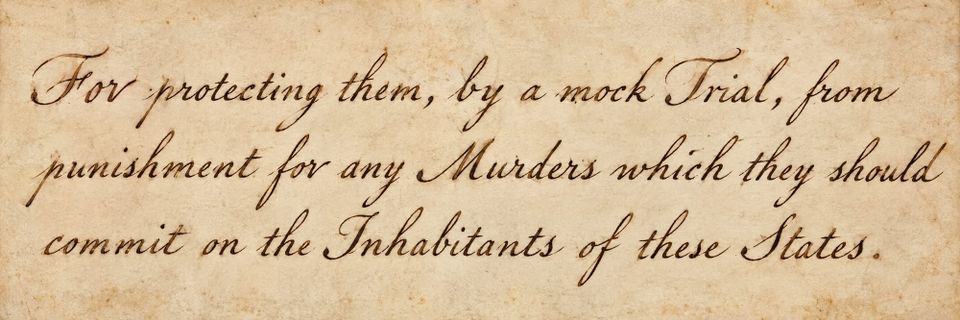
Consider the Declaration’s charge against the British monarch: “For suspending our own Legislatures, declaring themselves invested with power to legislate for us in all cases whatsoever.” For the colonists, Britain's overreach meant interference with colonial legislatures and an assertion of unlimited parliamentary authority. The New York Suspending Act of 1767 prohibited most legislative business until the colony supplied British troops as Parliament required. The Declaratory Act of 1766 asserted Parliament’s authority to bind the colonies “in all cases whatsoever,” invalidating colonial proceedings that disputed that authority. See New York Suspending Act 1767, 7 Geo. 3 c. 59, §§ I–II (Gr. Brit.) and Declaratory Act 1766, 6 Geo. 3 c. 12, §§ I–II (Gr. Brit.).
By contrast, Trump has wasted no exertion on suspending our federal or state legislatures — he simply ignores legislative acts, however lawful, that diverge from his own whims and appetites.
On March 20, 2025, Trump by executive order directed the secretary of education to facilitate the department’s closure. The order purported to require action only to the extent appropriate and legally permitted. See Exec. Order No. 14,242, § 2(a), 90 Fed. Reg. 13,679 (Mar. 20, 2025).
It was, however, Congress that established the Department of Education by statute. The governing statute expressly limits the abolition of organizational entities established by the department’s founding legislation. See 20 U.S.C. §§ 3411, 3473(a)–(b).
A supine majority on the U.S. Supreme Court has done too little to check the executive's encroachment on the legislative branch. On July 14, 2025, the Supreme Court stayed a preliminary injunction restricting the administration’s actions. See McMahon v. New York, No. 24A1203, slip op. at 1 (U.S. July 14, 2025).
Of federal spending under law, it is Congress’s power of the purse that allows representatives of that body to determine which programs receive funding. The president may propose cancellation of appropriations through the Impoundment Control Act’s rescission procedure; permanent cancellation requires congressional action. See U.S. Const. art. I, § 9, cl. 7 and Impoundment Control Act of 1974 § 1012, 2 U.S.C. § 683(a)–(b).
Only last month, on September 25, 2026, Trump submitted eleven proposed rescissions totaling approximately $810 million from several departments and international assistance programs. See Donald J. Trump, Special Message to Congress Proposing Rescissions of Budget Authority 1–12 (Sept. 25, 2026). A lawful proposal to cancel funding would not authorize allowing that funding to expire while Congress considers the proposal. See U.S. Gov’t Accountability Off., Impoundment Control Act of 1974: Review of the President’s Special Message of September 25, 2026, B-338788 (Sept. 29, 2026).
It is the federal legislature that appropriates money, and withholding by the executive prevents lawfully authorized spending by substituting presidential priorities for congressional decisions.
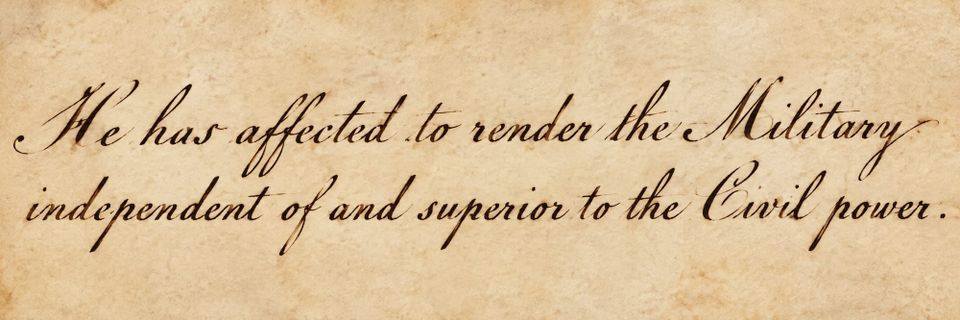
Trump wrongly arrogates to himself both executive and legislative power as this nation's high court watches diffidently.